Cooking fish to perfection
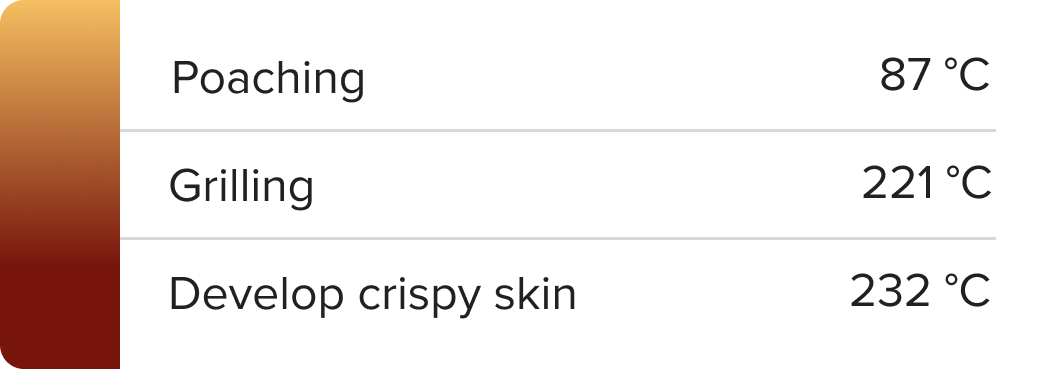
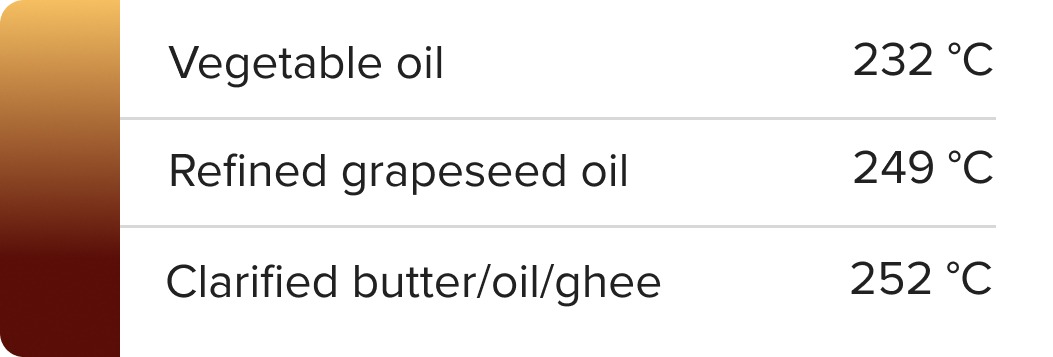
Fish is a delicate protein that can be easily overcooked, resulting in a dry and tough texture. It is important to pay close attention to the cooking time and temperature to ensure that the fish is cooked to perfection. Below are indications on what temperature to set for different types of fish and the smoking point of some recommended cooking fats. To prevent burning due to exceeding temperatures, we recommend only using the cooking oils and fats below.
Salmon
Keep in mind to always have the temperature set to a lower setting than the smoking point of the chosen cooking fat.
Temperature of the pan
Recommended cooking fat
Cod (and similar white fish)
Keep in mind to always have the temperature set to a lower setting than the smoking point of the chosen cooking fat.
Temperature of the pan

Recommended cooking fat
Gamba prawns
Keep in mind to always have the temperature set to a lower setting than the smoking point of the chosen cooking fat.
Temperature of the pan

Recommended cooking fat
Scallops
Keep in mind to always have the temperature set to a lower setting than the smoking point of the chosen cooking fat.
Temperature of the pan

Recommended cooking fat
Sous vide
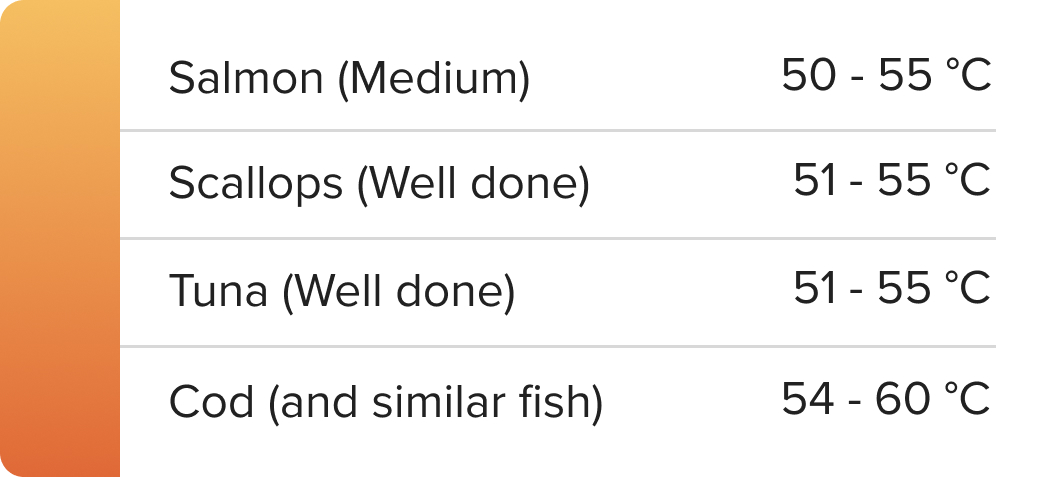
The following temperatures refer to the internal temperature of fish when they are generally considered to be cooked.
Fish is considered to be done within a small rage: it stops being raw, and starts being overcooked, within a margin of about 4-5 degrees.
Internal temperature